









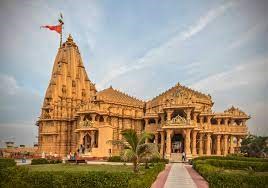
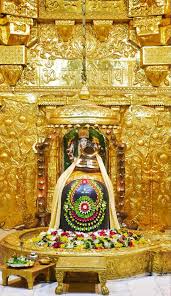
Shri Somnath Temple, also known historically as Deo Patan, is one of the most revered Hindu temples dedicated to Lord Shiva, worshipped here as Somnath – the Lord of the Moon. Located at Prabhas Patan near Veraval, on the western coast of Gujarat, the temple stands where the Arabian Sea meets sacred land. Somnath holds unmatched spiritual importance as the first among the twelve Jyotirlingas of Lord Shiva. The temple is also situated at the sacred Triveni Sangam, the confluence of the rivers Hiran, Kapila, and the mythological Saraswati, making it an ancient pilgrimage site mentioned in Hindu scriptures. Today, Somnath is not only Gujarat’s most prominent pilgrimage destination but also a symbol of faith, resilience, and cultural continuity.
Historical
Significance
According
to ancient tradition, Soma (the Moon God) lost his radiance due to a curse.
Seeking redemption, he bathed at Prabhas Tirth and worshipped Lord Shiva here.
Pleased, Shiva restored his brilliance, symbolising the waxing and waning
phases of the moon.
This
divine event gave rise to the names:
Historical
Overview
The
Somnath shrine has undergone multiple cycles of destruction and reconstruction
over centuries, yet devotion to Lord Shiva at this sacred spot has never
ceased.
Reconstruction
of the Present Temple (1950–1951)
After
India’s independence, the reconstruction of Somnath became a national cultural
movement.
The
temple trust today functions independently, and Shri Narendra Modi, Prime
Minister of India, serves as the Chairman of the Shri Somnath Trust.
Architecture
of the Present Somnath Temple
The
current Somnath Temple is built in the Chaulukya (Solanki) style of Hindu
temple architecture, also known as Kailash Mahameru Prasad style.
Architectural
Highlights:
Bāṇastambha
(Arrow Pillar)
Near
the seaside stands the Bāṇastambha, or Arrow Pillar,
bearing a Sanskrit inscription traditionally stating that Somnath lies on a
straight longitudinal line from the north toward the southern oceans.
While
this inscription symbolizes the temple’s ancient maritime and cultural
worldview rather than precise geography, the Bāṇastambha
remains an important historical and spiritual landmark within the temple
complex.
Presiding
Deity
The
Shiva Linga at Somnath is worshipped daily with Vedic rituals, Abhishekams, and
Aartis as per Shaiva traditions.
Temple
Timings & Daily Aarti
Temple
Open:
🕕 6:00 AM – 9:00 PM
(All days)
Aarti
Timings
Devotees
and visitors are welcome to attend the Aartis to experience the temple’s
spiritual atmosphere.
Visitor
Guide – How to Reach Somnath
Map
By
Road
Well‑connected
by state highways and buses.
By
Rail
By
Air
Contact
Information (Official)
Phone:
📞 +91‑94282‑14915
📞 +91‑94282‑14823
Address:
Shri Somnath Mandir
Prabhas Patan – 362268
District: Gir Somnath
Gujarat, India
Nearby
Sacred & Tourist Places
Bhalka
Tirth
The
sacred site where Lord Krishna is believed to have departed from the mortal
world. The complex includes Krishna shrines, banyan groves, and meditation
spaces.
Dehotsarg
Tirth
Located
on the banks of River Hiran, this site marks Shri Krishna’s Neejdham Prasthan
Leela (final divine journey).
Triveni
Sangam
The
confluence of Hiran, Kapila, and Saraswati rivers, believed to grant moksha.
Renovated ghats create a serene spiritual environment.
Gir
National Park
Home
to the Asiatic Lion, Gir Forest lies between Junagadh and Veraval and offers
guided safaris amidst rich wildlife.
Conclusion
Shri
Somnath Temple stands as a timeless symbol of devotion, endurance, and India’s
spiritual heritage. As the first Jyotirlinga of Lord Shiva, it continues to
inspire millions of devotees and visitors with its sacred presence, powerful
legends, and majestic architecture.
Somnath
is not merely a temple—it is faith rebuilt through centuries.
ॐ नमः शिवाय 🙏