









Shri Sai Baba of Shirdi is one of India’s most revered spiritual masters, worshipped by millions across the world. Widely regarded as a manifestation of Sri Dattatreya and known to followers as a saint and fakir, Sai Baba preached the universal message of love, compassion, equality, and devotion to God. He lived in Shirdi for several decades and attained Mahasamadhi in 1918. His teachings embraced both Hindu and Islamic traditions—he lived in a mosque that he named Dwarakamai, chanted the name of Allah, and encouraged Hindu rituals at the same time. Sai Baba’s famous sayings reflect his inclusive philosophy: • “Sabka Malik Ek” – One God governs all • “Allah Malik” – God is the supreme master Devotees of every religion, caste, background, and culture visit Shirdi seeking solace, healing, blessings, and spiritual awakening.
History
of the Temple
Shirdi
Sai Baba Temple, also known as the Sai Baba Samadhi Mandir, was built in 1922
under the initiative of Gopal Rao Booty of Nagpur, a wealthy devotee. The
temple now stands as the resting place of Sai Baba’s physical form.
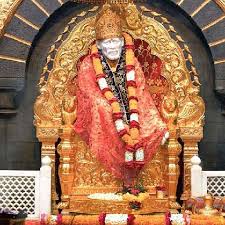
Inside
the Mandir, devotees can witness the beautiful marble idol of Sai Baba, adorned
with a golden crown and flowing robes. The Samadhi is carved from pristine
white marble and decorated daily with fresh garlands and flowers.
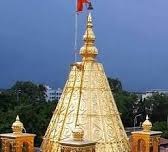
The
entire structure, including the iconic dome, features exquisite stonework and
gold plating, enhancing the temple’s divine ambiance. The Shri Saibaba Sansthan
Trust, Shirdi, manages all spiritual rituals, accommodation, donations, and
daily operations.
Today,
the temple welcomes more than 25,000 visitors daily, with numbers rising to
nearly 100,000 during festivals.
Spiritual
Significance
Sai
Baba is worshipped as a living source of divine blessings. Devotees experience
his grace in countless ways, through healing, protection, guidance, and inner
transformation.
Some
core spiritual values preached by Baba include:
Sai
Baba assured devotees that he would continue to bless them even after his
Mahasamadhi—an assurance that continues to draw millions to Shirdi every year.
Temple
Architecture
Shirdi
Sai Baba Temple is renowned for its simple yet spiritually powerful
architecture. Key features include:
The
architecture blends tradition and devotion, creating an atmosphere of purity
and peace.
Daily
Temple Schedule
Temple
Timings:
🕕 6:00 AM – 9:00 PM
(Open daily)
Aarti
Timings:
These
Aartis have been performed since Baba’s lifetime and remain the heart of
Shirdi’s daily worship.
How
to Reach Shirdi
Map
By Bus
Regular
buses operated by MSRTC and private operators connect Shirdi with major cities:
By
Train
Nearest
railway stations:
By
Air
Shirdi
has its own airport (Shirdi Airport) with flights from major cities.
Nearby airports:
Contact
Information (Official)
Phone
Numbers:
📞 (02423) 258500 –
P.R.O.
📞 (02423) 258777 –
Office
📞 (02423) 258870
Email:
📧 saibaba@sai.org.in
📧
saibaba@shrisaibabasansthan.org
Website:
🌐
https://www.sai.org.in
🌐
https://www.shrisaibabasansthan.org
Address:
Shirdi Sai Baba Temple
Tal. Rahata, Dist. Ahmednagar
Maharashtra – 423109
India
Nearby
Places to Visit
1. Shani
Shingnapur (Nevasa – Ahmednagar)
Famous
for its open‑door houses and temple dedicated to Lord Shani.
2. Muktidham
(Nashik)
A
unique white marble complex with all 18 chapters of the Bhagavad Gita inscribed
on its walls.
3. Kalaram
Temple (Nashik)
A
historic black stone temple dedicated to Lord Rama, built in 1794.
4. Pandavleni
Caves (Nashik)
Ancient
2,000‑year‑old rock‑cut caves linked to Jainism.
5. Ellora
Caves (Aurangabad)
A
UNESCO World Heritage site showcasing Hindu, Buddhist, and Jain cave temples.
6. Daulatabad
Fort (Aurangabad)
One
of India’s most formidable medieval forts.
7. Trimbakeshwar
(Nashik)
A
sacred Jyotirlinga temple and source of the Godavari River.
Conclusion
Shirdi
Sai Baba Temple stands as a timeless beacon of peace, devotion, and universal
love. For devotees who seek blessings, spiritual guidance, or emotional
healing, Sai Baba’s presence continues to inspire faith and transform lives.