








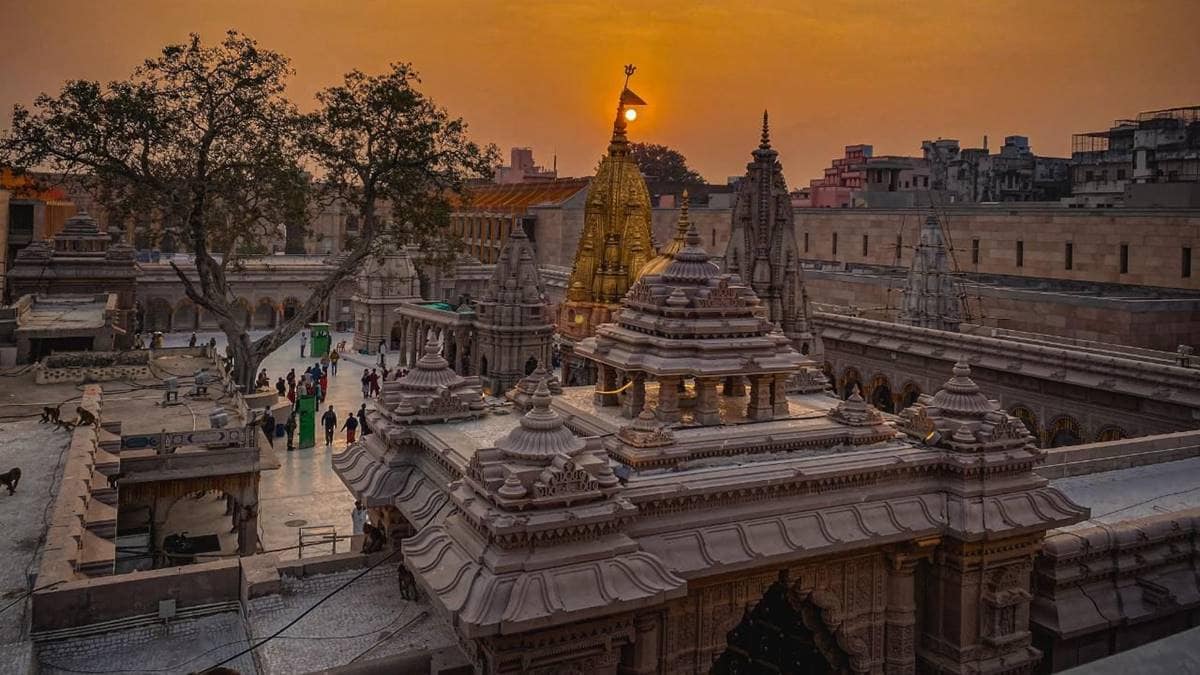
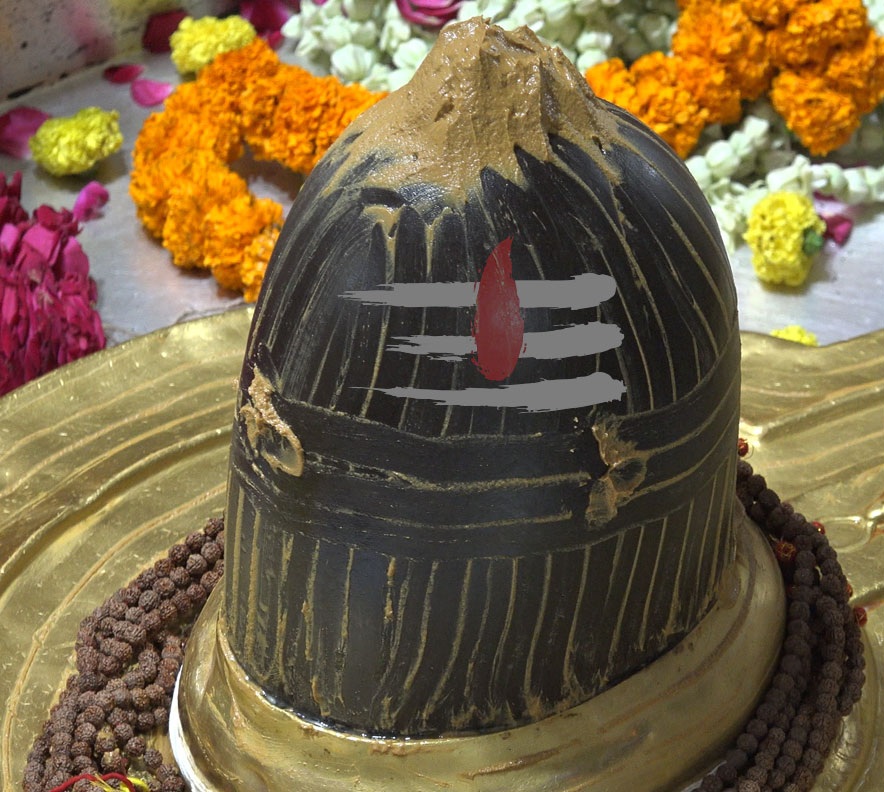
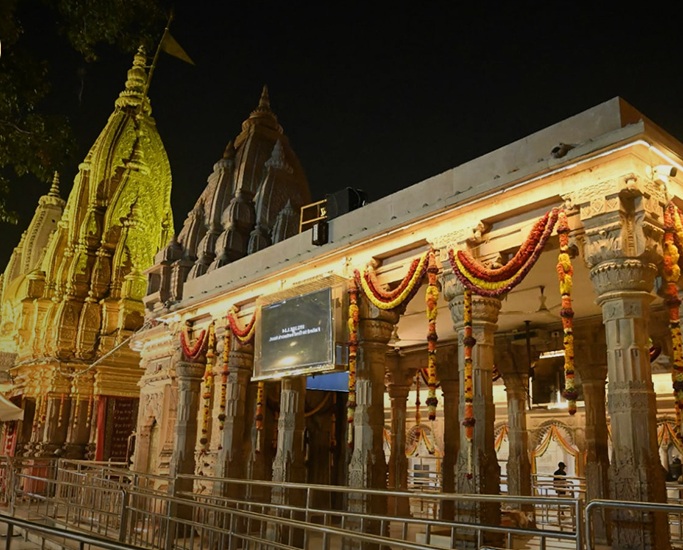
Kashi Vishwanath Temple is one of the most sacred Hindu shrines dedicated to Lord Shiva, revered here as Vishweshwara or Vishwanath, meaning Lord of the Universe. The temple is located in Vishwanath Gali, Varanasi (Uttar Pradesh), on the western bank of the holy River Ganga. Varanasi, historically known as Kashi, is regarded as the oldest living city in the world, and the temple stands at its spiritual core. Kashi Vishwanath is among the twelve Jyotirlingas, the most powerful manifestations of Lord Shiva, making it one of the holiest pilgrimage sites in Hinduism. The word Vishweshwara is derived from Vishva (universe) and Ishwara (supreme ruler), symbolizing Shiva as the absolute cosmic authority.
Historical
Background
References
to the Kashi Vishwanath Temple appear in ancient Hindu texts, including the Skanda
Purana (Kashi Khanda), affirming the temple’s central role in Shaiva
traditions.
The
temple has undergone several cycles of destruction and reconstruction
throughout history:
Architectural
Development and Royal Contributions
Over
the centuries, several rulers and devotees contributed to the temple’s
development:
Deity
and Sacred Legend
The
presiding deity of the temple is Lord Shiva, worshipped here as a Jyotirlinga—a
divine pillar of infinite light.
According
to the Shiva Purana, Lord Shiva manifested as an endless column of fire to
resolve a cosmic dispute between Brahma and Vishnu over divine supremacy.
Unable to find its beginning or end, both gods realized Shiva’s boundless
nature. This divine manifestation is the spiritual foundation of all
Jyotirlinga shrines.
The
Jyotirlinga symbolizes the union of the formless (nirguna) and the manifest
(saguna) aspects of Shiva, representing infinite existence and ultimate truth.
Temple
Structure and Layout
The
Kashi Vishwanath Temple complex is located within a narrow sacred lane near the
Ganga and consists of multiple shrines dedicated to various deities, including Kaal
Bhairav, Vinayaka, Vishnu, Shani, and Avimukteshwara.
Key
architectural features include:
Spiritual
Importance of Kashi Vishwanath
Kashi
Vishwanath Temple holds an unmatched position in India’s spiritual landscape.
Hindu belief considers darshan of Vishwanath and a sacred bath in the Ganga as
pathways to moksha (liberation).
Many
legendary saints and spiritual leaders—including Adi Shankaracharya, Sant
Tulsidas, Swami Vivekananda, Guru Nanak, and Ramakrishna Paramhansa—are
associated with Kashi.
It
is widely believed that:
Temple
Timings and Daily Rituals
Devotees
can book Aarti, Rudrabhishek, Sanyasi Bhojan, and special darshan services
through the official Shri Kashi Vishwanath Temple portal.
Visitor Guide: How to Reach
Map
By
Air
Varanasi
is well connected by daily flights to Delhi, and major cities such as Mumbai,
Kolkata, Chennai, Bengaluru, and Hyderabad.
By
Rail
Varanasi
Junction (Cantt) serves as a major railway hub with direct connectivity to
metropolitan and religious cities across India.
By
Road
The
city is easily accessible from Prayagraj, Lucknow, Kanpur, Patna, Bodh Gaya,
Khajuraho, Sarnath, and nearby regions via state and national highways.
Nearby
Places to Visit
Conclusion
Kashi
Vishwanath Temple is not merely a monument or pilgrimage site—it is a living
center of faith, devotion, and liberation. Rooted in ancient scriptures and
continuously revered through centuries, the temple stands as an eternal symbol
of India’s spiritual heritage and mankind’s quest for ultimate truth.
Har
Har Mahadev.